
Odds are, you’ve encountered a high-functioning addict and not even realised it. In the vibrant landscape of Brisbane, the Gold Coast, and the Sunshine Coast, success often masks a silent struggle. As a Clinical Criminologist and Counsellor, I frequently work with ultra-high-net-worth individuals battling high-functioning addiction or depression while maintaining successful careers and substantial wealth whilst secretly grappling with substance use disorders or persistent low mood.
This blog sheds light on this hidden battle, offering understanding and genuine support for leaders like you. My insights aim to guide you toward lasting well-being.
Important Disclaimer:
This blog provides general information for educational purposes only. It is not professional medical advice, diagnosis, or treatment, and does not create a client relationship. Always consult a qualified professional, like Dr. Ingrid McGuffog, for advice tailored to your specific circumstances. Reliance on this content is solely at your own risk.

Frequently Asked Questions (FAQs)
It’s natural to have questions about challenges that are so often kept secret. This section offers clear answers to frequent queries regarding high-functioning addiction and depression.
Q1: Can someone be truly successful and still struggle with addiction?
Absolutely. High-functioning addiction refers to individuals who appear outwardly successful while managing demanding careers, family life, and extensive financial wealth all while quietly battling substance use disorders.
The misconception that addiction only affects those whose lives are falling apart is just that, a misconception. Many high-achievers use substances or behaviours as a coping mechanism for immense pressure, stress, or underlying issues, often perfecting the art of concealment.
Q2: What are the common long-term effects of unaddressed high-functioning addiction?
While individuals may maintain an outward appearance of success, unaddressed high-functioning addiction or depression can lead to significant long-term consequences. These often include:
- Declining mental and emotional health: Deep down, it’s the bewildering question of
“Why am I so overwhelmingly irritable after a successful week, when everything outwardly is perfect?”
or the gnawing anxiety that constantly churns, even when on holiday in Noosa. There’s a pervasive fatigue that no amount of luxurious rest seems to shift, leaving one drained despite presenting as fully composed and in control.
- Eroding relationships: It’s the sharp pang of guilt after snapping at a loyal PA or the quiet despair of feeling emotionally distant from a spouse, despite maintaining all appearances for social events. There’s a painful awareness that genuine connection feels increasingly elusive, and the burden of guarding secrets creates a profound loneliness, even when surrounded by family.
- Physical health deterioration: The body sends insistent, unsettling signals that are difficult to ignore: unexplained heart palpitations during a crucial meeting, chronic insomnia despite a demanding schedule, or lingering aches that no massage can fully resolve. One might find themselves constantly battling a deep-seated exhaustion, a persistent physical toll that contradicts their otherwise vigorous lifestyle.
- Professional instability: Beneath the polished exterior, there’s a creeping fear of losing one’s edge. Perhaps it’s a near-miss on a critical investment decision, a lapse in concentration during a high-stakes presentation, or the increasing effort required to maintain a flawless performance, bringing the chilling thought:
“What if I make a mistake that affects my reputation or legacy?”
- Increased risk of severe addiction: What began as a discreet coping mechanism for stress, perhaps a nightly ritual, starts to accelerate. There’s the unsettling realisation:
“I used to unwind with one drink, now I need three or four just to feel normal”
or the quiet dread of facing a weekend without the usual substance. The feeling of being increasingly controlled by the very thing one believed was under control becomes a deeply unsettling reality.
Q3: How does therapy for high-functioning addiction differ from conventional treatment?
Therapy for high-functioning addiction is highly individualised, prioritising discretion and fitting into a demanding lifestyle. It delves beyond mere abstinence to address the underlying drivers unique to successful individuals, such as stress or perfectionism.
The goal is to provide tailored strategies for sustainable recovery without unnecessarily disrupting their established professional and personal lives.
Ready to address these hidden challenges?
If you resonate with these insights and recognise a need for discreet, expert support for high-functioning addiction or depression, Dr. Ingrid McGuffog is here to guide you. Take the crucial step towards genuine well-being and regain control over your life, not just your image.
Contact Dr. Ingrid McGuffog Here or Book an Appointment Directly
Wealth and Wellbeing: Who Battles High-Functioning Issues?
In the dynamic, high-stakes environments of Brisbane, the Gold Coast, and the Sunshine Coast, success can often mask a profound internal struggle. We’re referring to ultra-high-net-worth individuals, the very leaders and innovators who shape our economy.
Outwardly, they appear to have it all: thriving careers, stable family lives, and significant financial freedom. Yet, many quietly battle high-functioning addiction or depression.
This isn’t the conventional image of struggle. Instead, it’s a nuanced challenge where immense pressure, the relentless pursuit of perfection, and often, a deep sense of isolation, can silently foster dependency. These individuals are masters at maintaining appearances, making their private struggles incredibly difficult to detect, even by those closest to them.
For such complex challenges, engaging in confidential conversations can be a crucial first step.
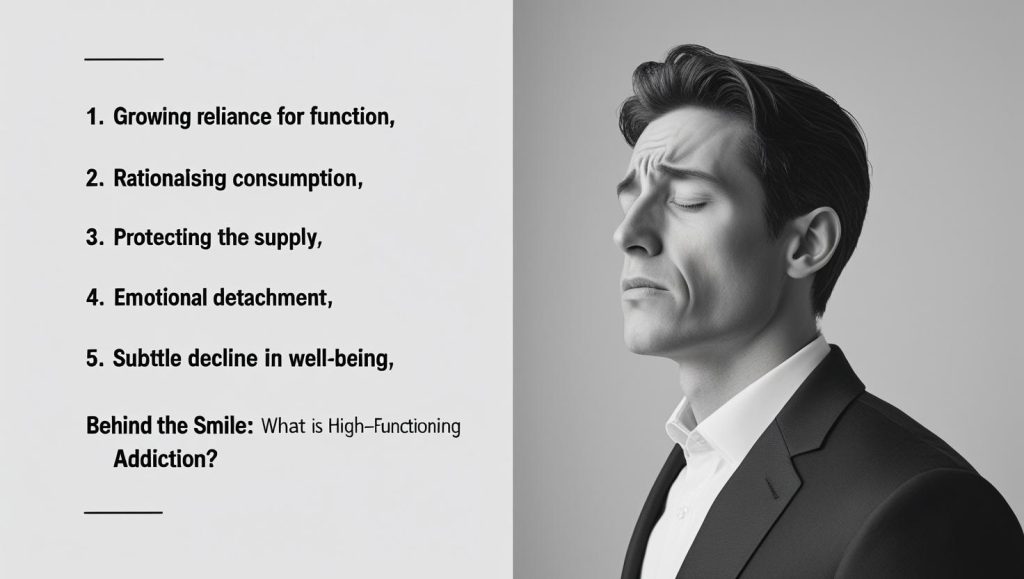
5 Signs Behind the Smile: What is High-Functioning Addiction?
High-functioning addiction describes a complex condition where a person maintains outward success despite a problematic reliance on substances or behaviours. Its hidden nature makes it hard for anyone, colleagues, friends, or even family, to truly see the depth of the struggle. For high-achievers, signs are rarely overt; they are expertly concealed beneath an unwavering commitment to professional duties and social engagements.
Here are five subtle indicators that can suggest a deeper issue beneath a seemingly perfect façade:
1. Growing Reliance for Function:
Deep down, there’s the pervasive feeling of needing alcohol or a substance just to “switch off” after a demanding day of high-stakes decisions, or to “switch on” and perform under pressure, rather than finding genuine enjoyment.
2. Rationalising Consumption
Despite mounting internal unease or subtle physical cues, the individual meticulously justifies increasing intake: “It’s simply to manage stress,” or “Everyone in my industry drinks this much.”
3. Protecting the Supply:
A quiet, intense anxiety emerges around ensuring constant access to the substance. This might involve secretly replenishing stocks or feeling disproportionately worried about running out before a major social or business event.
4. Emotional Detachment:
The emotional landscape subtly shifts. There might be a noticeable decrease in genuine presence during intimate family moments, increased irritability with close colleagues, or a profound sense of loneliness despite being surrounded by people, all driven by the need to maintain control and secrecy.
5. Subtle Decline in Well-being:
While major professional setbacks are often avoided, a persistent fatigue sets in that no amount of luxurious rest seems to alleviate. Unexplained, recurring physical ailments are dismissed amidst a busy schedule, hinting at the hidden toll on mental and physical health.
Recognising these indicators often prompts a deeper look, which is where effective therapy can provide invaluable support.
Success’s Paradox: Why Leaders Turn to Substances
The very qualities that propel individuals to the pinnacle of success can, ironically, create vulnerabilities. The immense pressure to consistently perform, the weight of significant responsibility, and the often-isolated nature of leadership roles can lead to overwhelming stress.
For some, substances or compulsive behaviours become a desperate, temporary escape or a misguided attempt at self-medication.
Research underscores this reality. Studies on substance use by occupation consistently reveal a concerning trend among high-level professionals. Data indicates:
- Executives, managers, and other well-paid professionals report higher rates of substance use compared to many other workers.
- A notable percentage within management roles report recent drug use or heavy alcohol consumption.
- A significant portion are diagnosed with a substance use disorder.
It’s crucial to understand these figures may be underreported. High-earning professionals often have heightened concerns about their privacy and reputation. Their ability to maintain appearances and deflect suspicion means their struggles can go unnoticed for far longer, despite the escalating severity of the problem.
This relentless drive for perfection, coupled with ready access to resources, can sadly prolong the period before the true impact of addiction is acknowledged.
The Risks & Real World Statistics
An individual managing high-functioning addiction may present as entirely in control, yet they face significant risks. This can include immediate dangers such as impaired driving, engaging in risky sexual encounters, or experiencing blackouts. Beyond these immediate concerns, heavy substance use poses numerous severe health threats, including:
- liver disease
- pancreatitis
- cancer
- brain damage
- significant memory loss
- high blood pressure
Looking closer to home, national data reveals the scale of addiction within Australia. The latest National Drug Strategy Household Survey from the Australian Government, as of 2020, estimated the following:
- Approximately 2.8 million individuals are regular cannabis users in Australia.
- Around 113,000 people regularly use cocaine across the country.
- About 237,000 Australians regularly use amphetamines.
- Approximately 283,000 people in Australia are addicted to opioids.
- Tragically, 6,000 Australians die each year as a direct result of alcohol abuse.
Collectively, it was estimated that around 2,600,000 Australians had an addiction to drugs or alcohol in 2020. This represents a notable increase of 25% from 2,100,000 individuals in 2017.
Ready for a confidential conversation about your genuine well-being?
If this blog resonates with your experiences or those of someone you care about, remember that seeking support is a sign of immense strength, not weakness.
Dr. Ingrid McGuffog provides discreet, expert guidance tailored to the unique challenges faced by leaders and high-achievers in South-East Queensland. To understand more about finding transformative healing, you can read about how to Reframe your life and embrace suffering for healing and transformation. Take the definitive step towards a life where true well-being matches your achievements.
Contact Dr. Ingrid McGuffog Here or Book an Appointment Directly